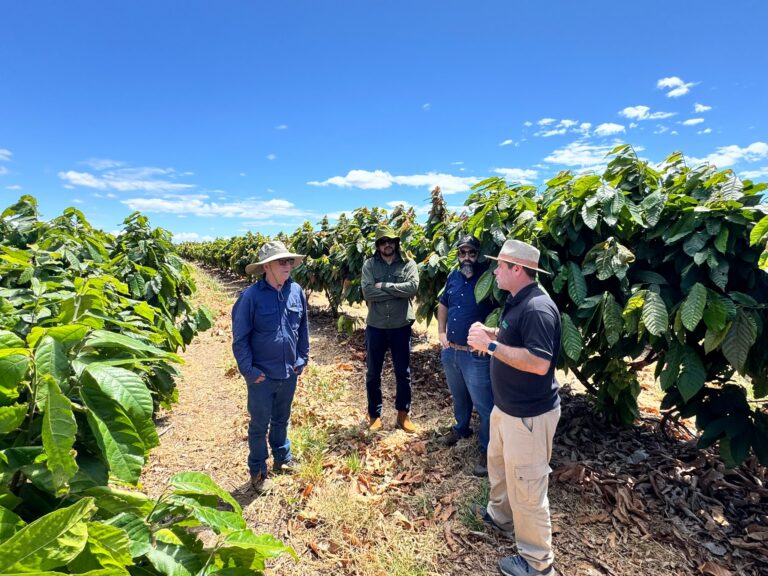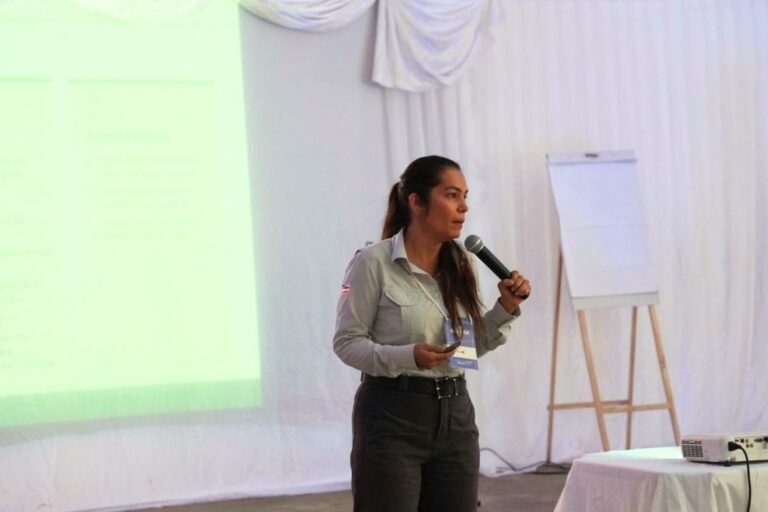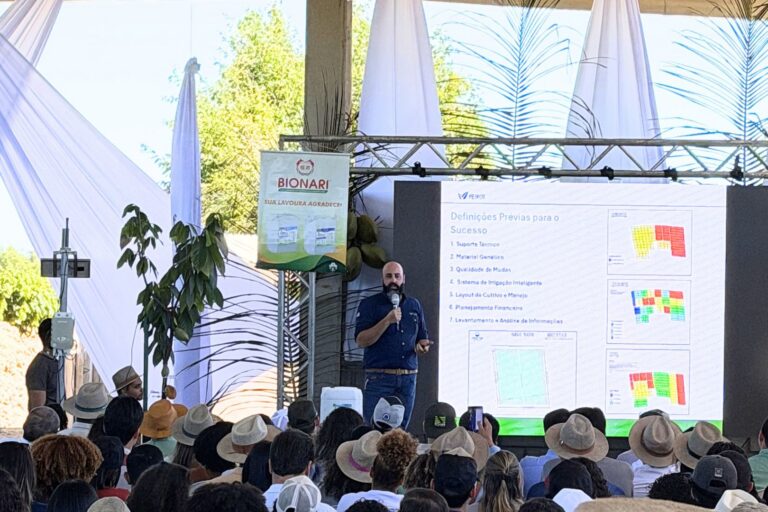


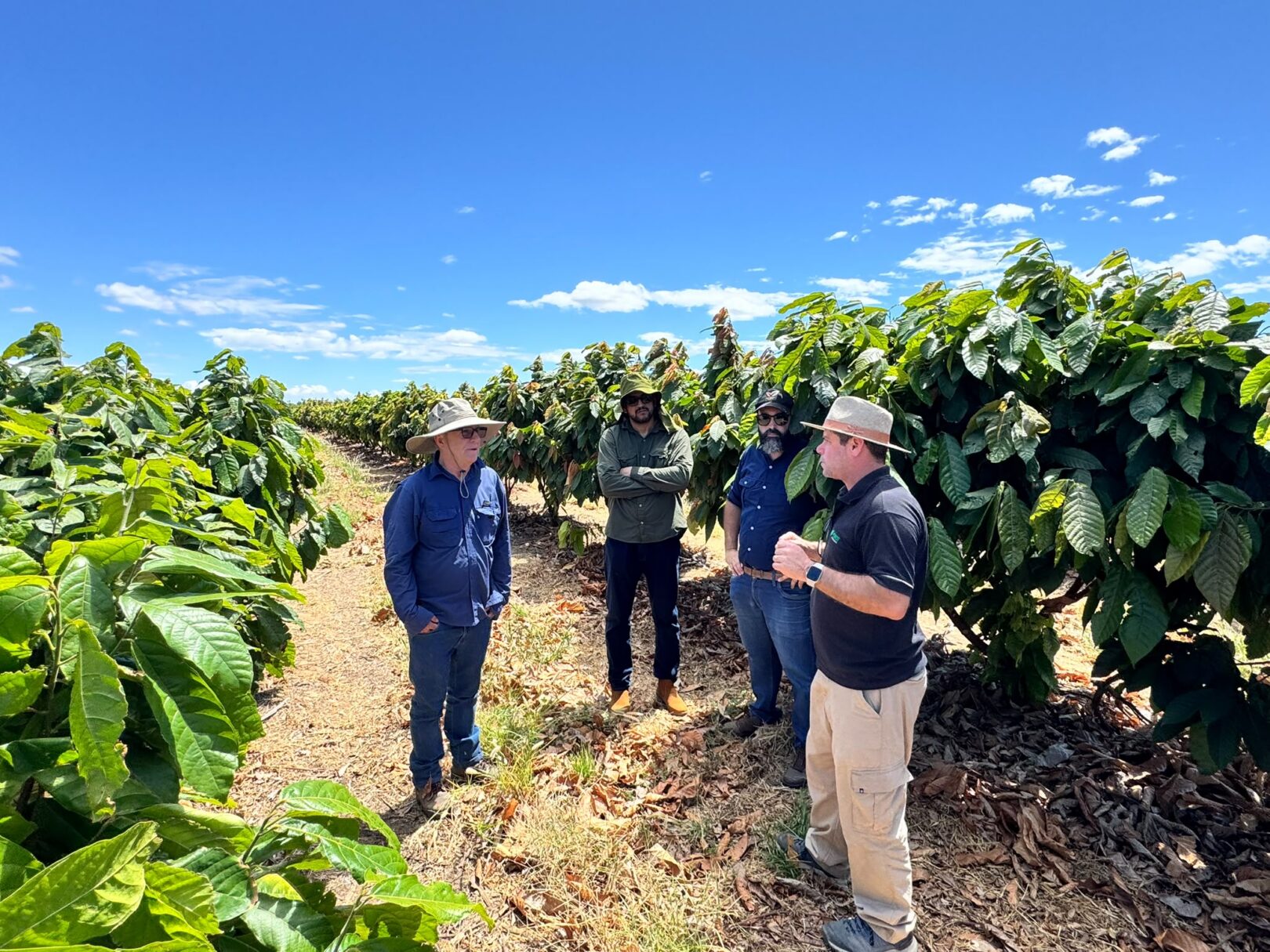
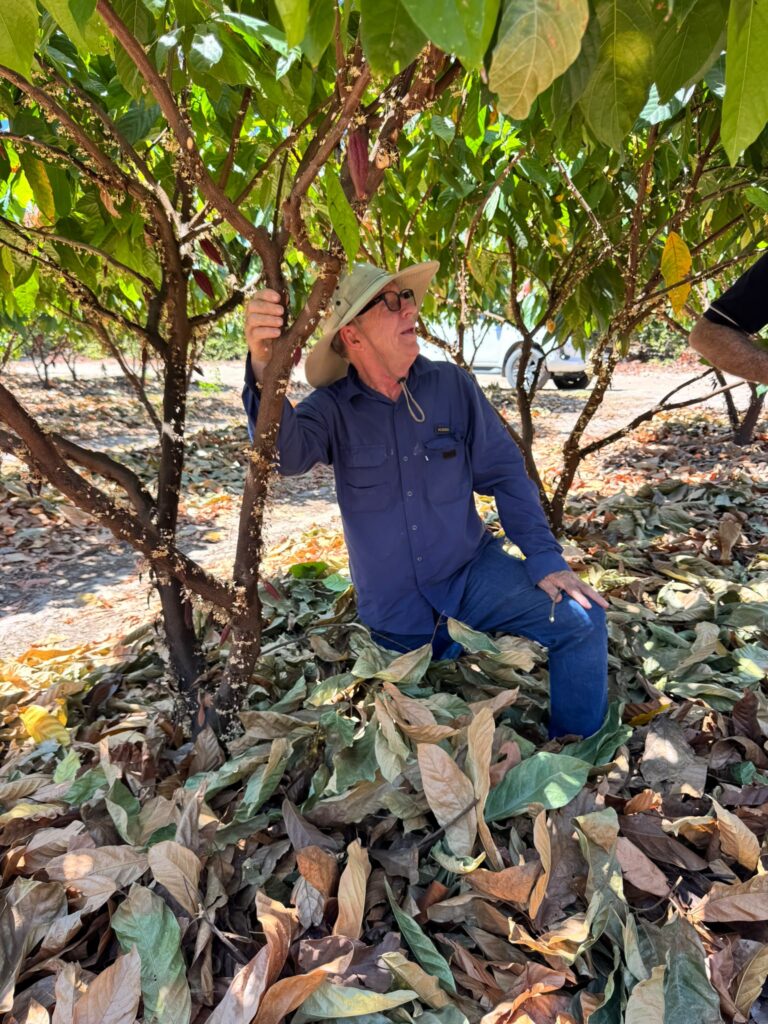
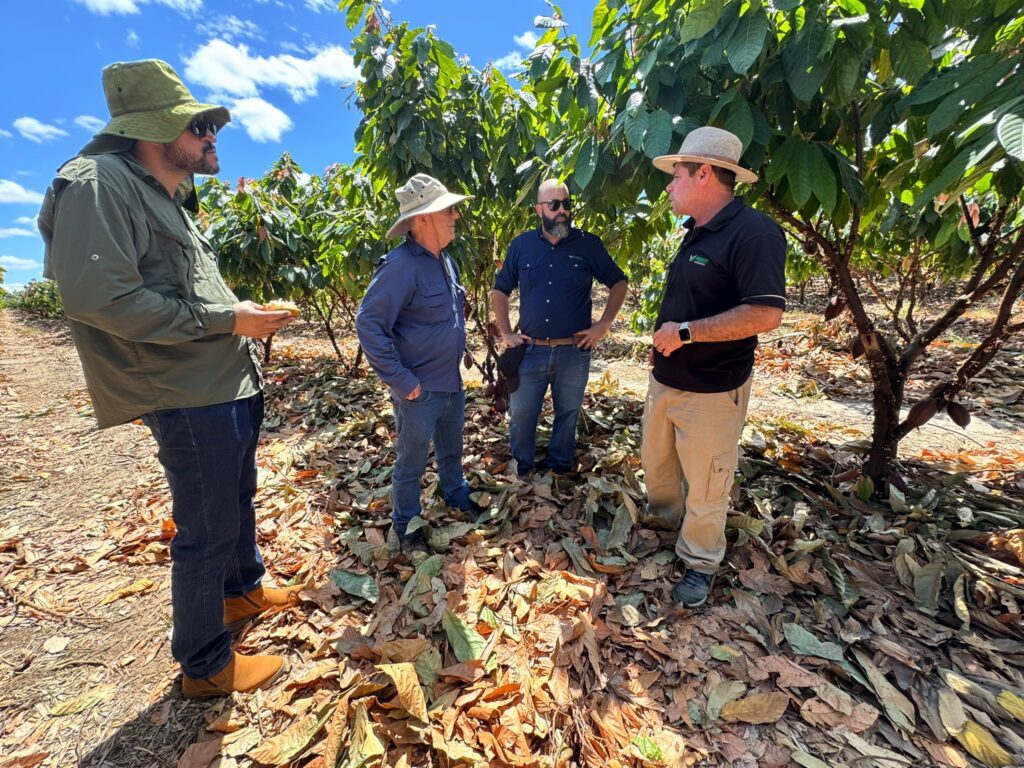
As part of our continual effort to use the most innovative and effective cacao farming practices, Peirot recently welcomed Professor Dario Ahnert of the Universidade Estadual de Santa Cruz (UESC) to our farm in Bahia.
Professor Ahnert is one of Brazil’s leading cacao researchers, with decades of experience in cacao genetics, plant improvement, and production systems. His visit gave our team the opportunity to evaluate plant development, field conditions, and the systems we are building to grow cacao successfully in the semi-arid environment of Bahia.
For us, this work goes far beyond adapting cacao to a new region. We are developing a different production model, one designed to make cacao farming more predictable, scalable, and resilient.
Bringing Cacao Research Into Real Production Conditions
Research becomes especially valuable when it is tested against the realities of a working farm.
During Professor Ahnert’s visit, our team was able to examine plant performance directly in the field and discuss the agronomic decisions behind our production system. That kind of hands-on exchange allows scientific knowledge to interact with real conditions, real plants, and real production challenges.
It also allows us to move faster. Instead of treating research and farming as separate activities, we can use field observations, experimentation, and expert input together to continually refine the way we grow cacao.
A Different Model for Cacao Farming
Traditional cacao production has often been associated with specific tropical environments and growing regions. Peirot is approaching the crop from a different starting point.
Our farm is located in the semi-arid region of Bahia, where successful cacao production requires careful control of resources and close attention to plant performance. Rather than relying on environmental conditions alone, we are building systems that allow us to manage those conditions more precisely.
Our production model combines precision irrigation, remote field monitoring, plant selection, agronomic experimentation, data collection, and disciplined farm management. Each of these elements supports the same objective: creating a production system that can perform consistently and be repeated across a larger number of hectares.
Using Data to Reduce Variability
Agriculture will always involve variables that cannot be completely controlled. Weather changes. Plants respond differently. Disease pressure can emerge. Soil and water conditions vary across a farm.
The opportunity is to reduce unnecessary uncertainty wherever possible.
Through monitoring and data collection, our team can better understand conditions across the farm and respond more precisely. Irrigation can be adjusted according to plant and environmental needs. Plant performance can be compared. Field trials can help identify what works best under our conditions.
Over time, those decisions create something larger than individual improvements. They create a more repeatable production system.
Why Scale Matters
Producing cacao successfully on a small area is one challenge. Repeating that success consistently across many hectares is another.
For Peirot, scalability is one of the most important measures of whether an agricultural system truly works. A method must be practical, measurable, and repeatable. It must also use water, energy, labor, and other resources responsibly as the operation grows.
This is why precision irrigation, monitoring, plant selection, and agronomic testing are so important. They allow us to build processes that can be applied consistently rather than relying solely on individual judgment or ideal growing conditions.
The objective is not simply to produce more cacao. It is to create a system capable of producing high-quality cacao efficiently and sustainably at commercial scale.
Building Greater Resilience Into Cacao Production
The global cacao industry continues to face significant challenges. Climate variability, disease pressure, inconsistent yields, and supply constraints all affect producers and the broader cocoa market.
Increasing resilience requires new ways of thinking about where and how cacao can be grown.
By combining agricultural science with technology and continuous field testing, we believe producers can gain greater control over important inputs and create production systems that are better equipped to handle changing conditions.
That does not mean eliminating agricultural risk. It means understanding more of the variables, responding to them more effectively, and continuously improving the system.
Science, Technology, and the Future of Cacao
Visits from experts such as Professor Ahnert are an important part of that process.
They allow our team to test assumptions, compare observations, challenge existing practices, and identify opportunities for improvement. Just as importantly, they connect academic research with the realities of commercial production.
At Peirot, we see innovation as an ongoing process rather than a single technology or breakthrough. It comes from combining scientific expertise, field experience, data, experimentation, and disciplined execution.
Our goal is not simply to prove that cacao can thrive in semi-arid Bahia.
Our goal is to change the way the world grows cacao.