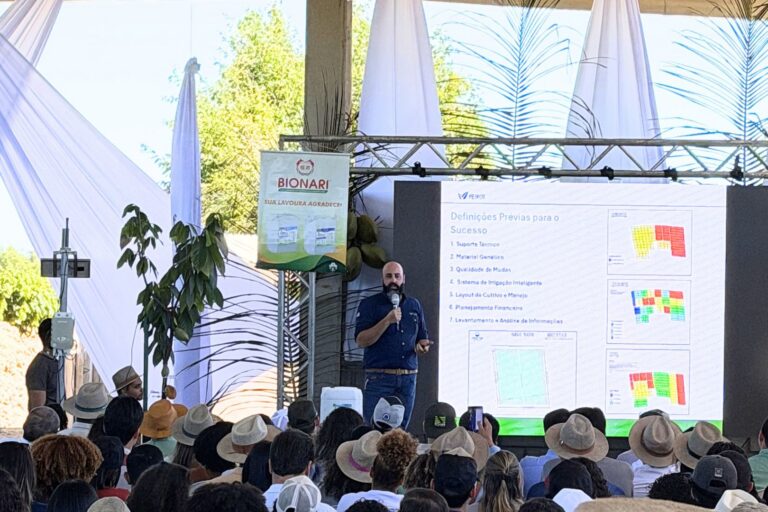


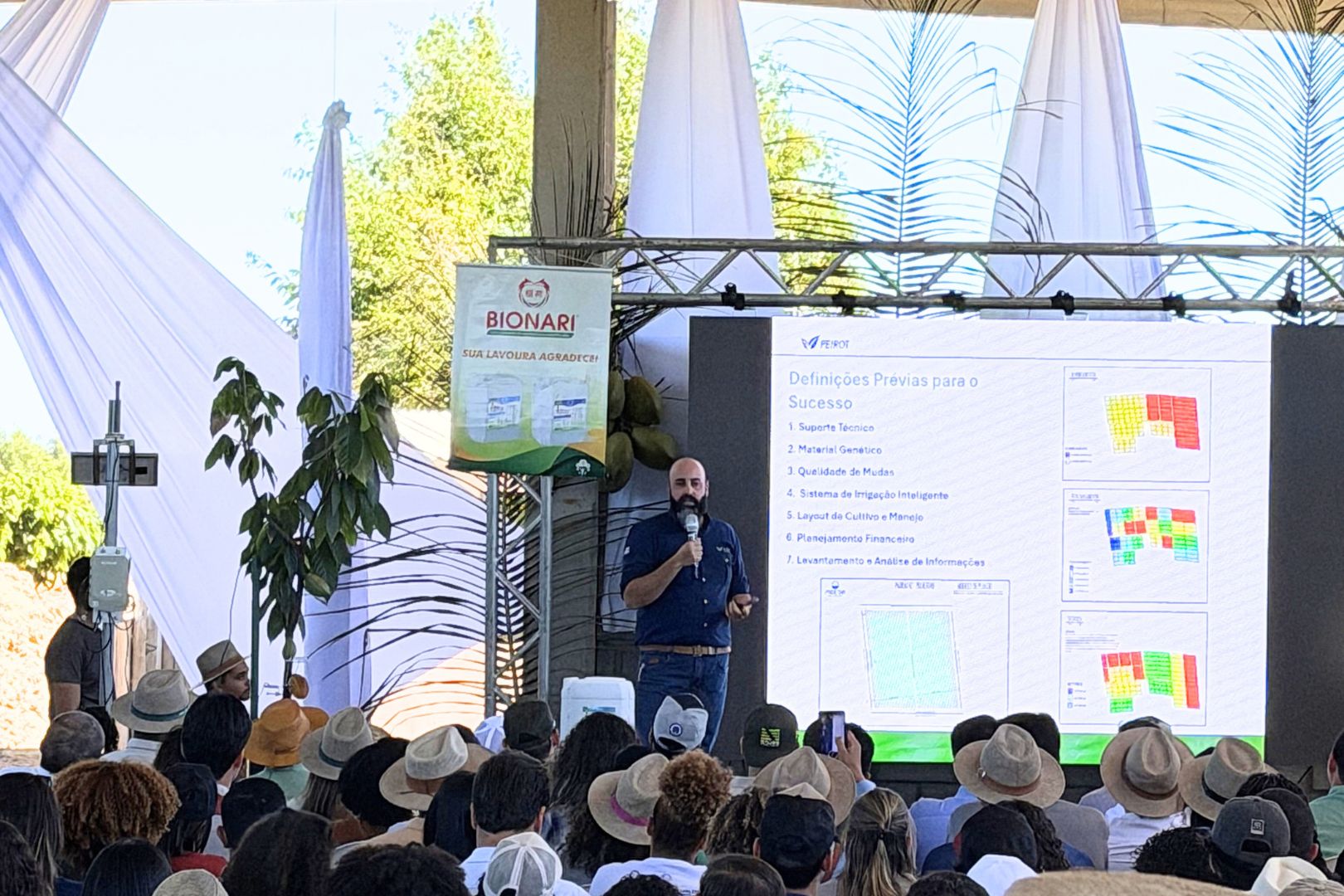
During the Barra AgroShow 2026, Peirot welcomed farmers, investors, students, representatives of rural organizations, partner companies, and public institutions to Fazenda São Roque for a hands-on look at our cacao operation in semi-arid Bahia.
The Dia de Campo was designed to do something that presentations and reports cannot: bring people directly into a working farm and let them see, touch, and understand how modern cacao production works in practice.
Throughout the visit, guests explored the systems, people, and agricultural practices behind our operation, from precision irrigation and monitoring technology to cacao flowering, harvesting, fermentation, and drying.
Opening the Farm to the People Driving Agriculture Forward
The Farm Visit brought together a diverse group of people connected by a shared interest in the future of agriculture. We were honored to welcome representatives from government and agricultural organizations, including SEAGRI, ADAB, SENAR, Instituto Tombador, and the Rural Producers’ Union of Luís Eduardo Magalhães, along with farmers, investors, students, businesses, and visitors from across the region.
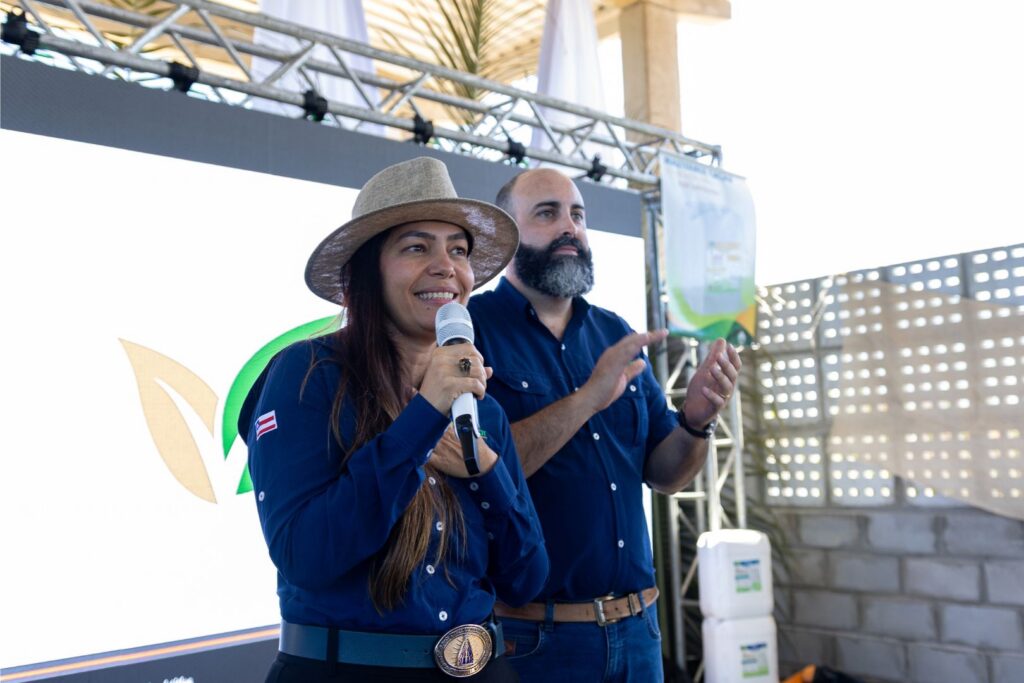
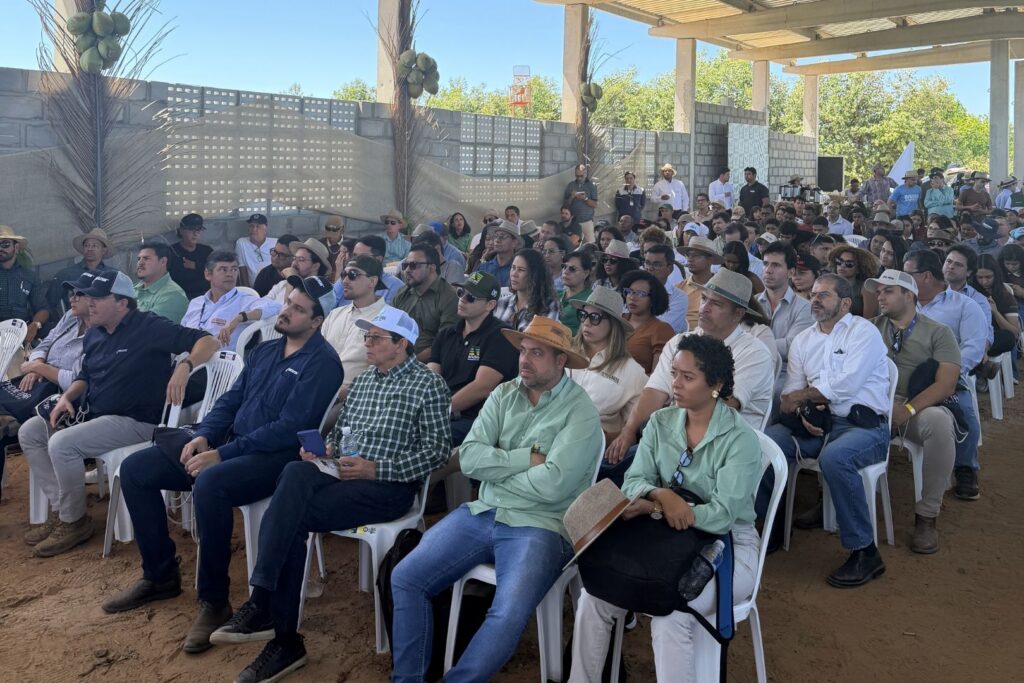
Events like this are valuable because agricultural innovation doesn’t happen in isolation. It develops through conversations between producers, researchers, technology providers, institutions, investors, and the people working in the field every day.
We were also grateful for the support and participation of Netafim, Bionari, Coopafbasul, Mastermix Cacau, Projetar Irrigação, and CS Engenharia throughout the event.
A Working Cacao Farm Is Different From a Presentation
One of the most important parts of the day was giving visitors direct access to the operation itself.
Surrounded by cacao trees, guests met our agronomists and farmers, handled cacao beans and seeds, felt the texture of fermented beans, and saw the daily work behind each bag of cacao produced on the farm.
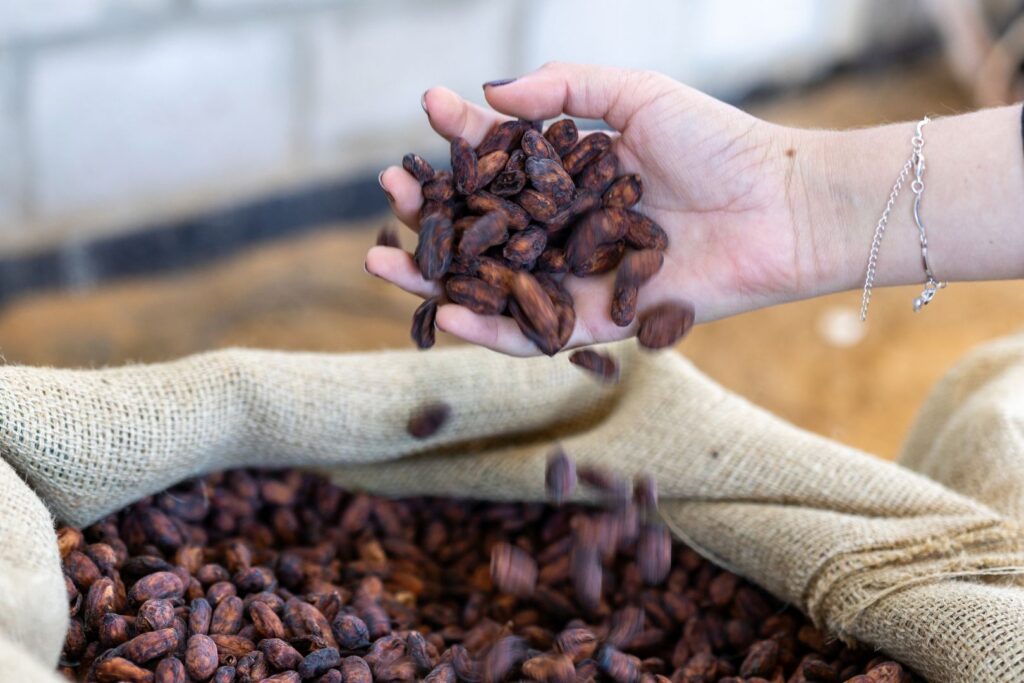
That physical experience matters. There’s a significant difference between hearing how cacao is produced and standing in the field while the process is happening around you. A working farm provides context that cannot easily be captured in a report or slide presentation.
The Technology Behind Cacao in Semi-Arid Bahia
Growing cacao successfully in the semi-arid environment of Bahia requires a different approach to traditional cacao farming.
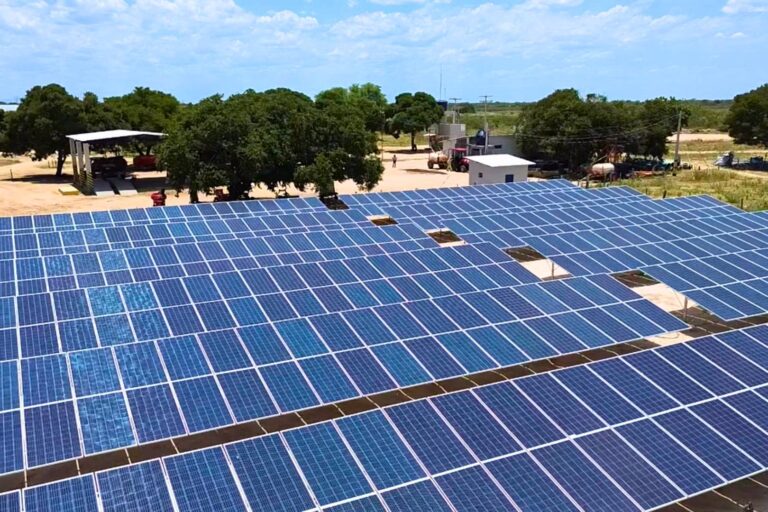
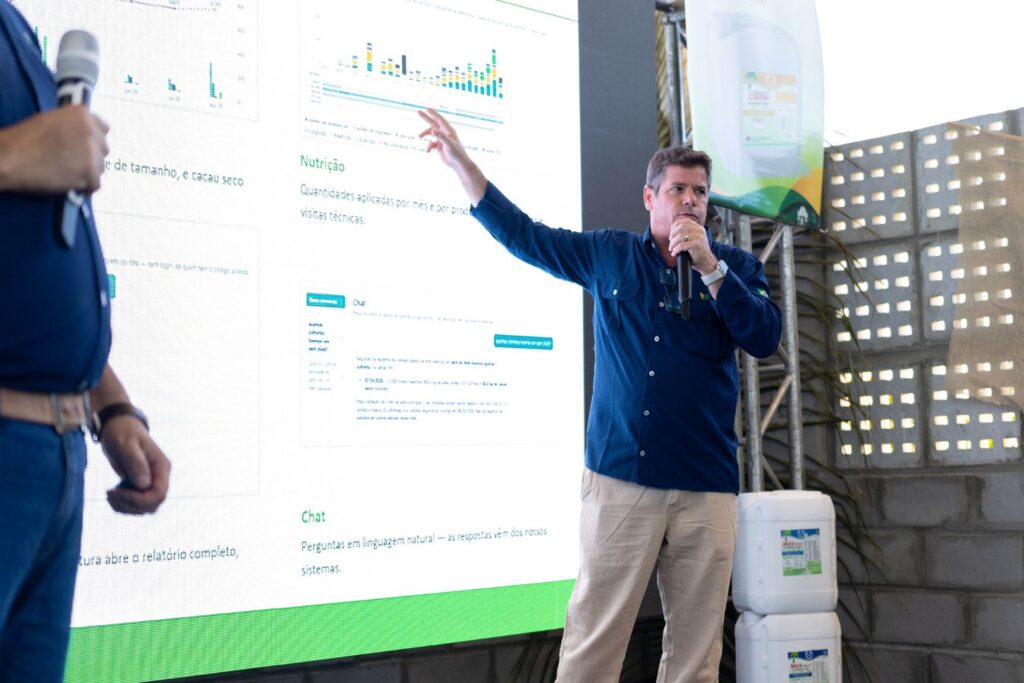
During the Farm Visit, our team demonstrated some of the systems that make our operation possible, including precision irrigation, remote monitoring, bioinputs, clonal selection, and management tools designed to improve efficiency, productivity, and responsible resource use.
These technologies are not separate from the farming process. They are integrated into everyday decisions.
Water must be delivered accurately. Conditions throughout the fields must be monitored. Plant performance must be evaluated. Agronomic decisions must be made using both field experience and reliable data.
This combination of applied agriscience, technology, and a trained team is what allows us to build a production system capable of operating consistently and growing across a larger number of hectares. As we have said before, scale is not simply about planting more. It is about developing systems that can continue delivering results as the operation grows.
Seeing the Entire Cacao Cycle in One Place
For many visitors, one of the most memorable parts of the day was seeing the complete cacao lifecycle unfolding across the farm.
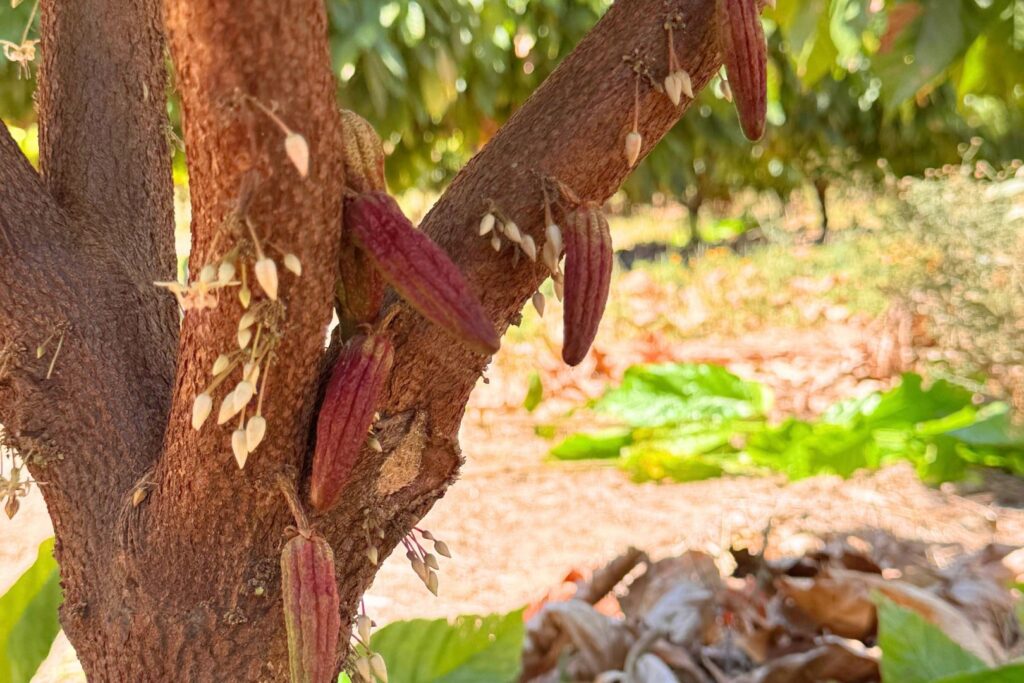
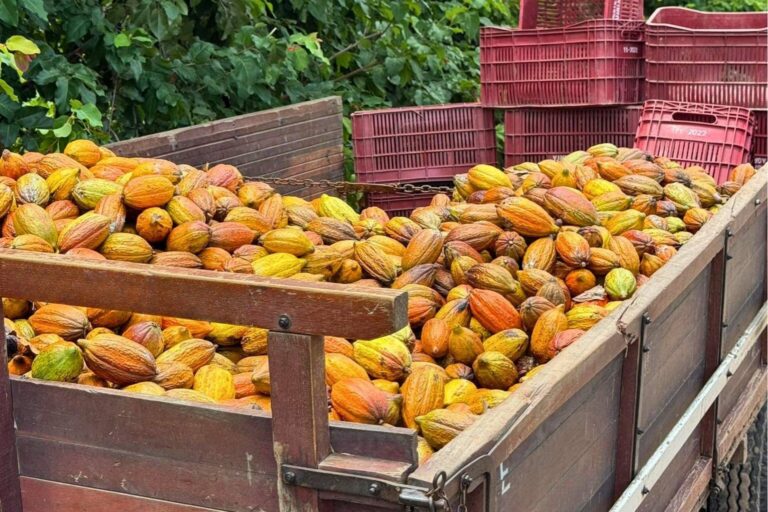
Cacao has an unusual and fascinating growth cycle. Its delicate flowers emerge directly from the trunk and larger branches of the tree. From those flowers, tiny fruitlets begin to form and eventually develop into mature cacao pods.
During the visit, guests were able to see multiple stages of this process at the same time: flowers, newly forming fruit, mature pods ready for harvest, beans undergoing fermentation, and cacao prepared for market.
For some visitors, it was the first time seeing where chocolate truly begins: not in a factory or a store, but with a small flower growing from the trunk of a cacao tree in semi-arid Bahia.
It was a simple moment, but it captured much of what makes the Farm Visit worthwhile. Understanding cacao becomes very different when you can follow the process from a living plant all the way to the fermented and dried bean.
Innovation Requires People
Technology was an important part of the day, but none of these systems operate on their own.
Behind every irrigation decision, field observation, presentation, farm tour, and visitor experience was the Peirot team. From agronomy and irrigation to crop management and hospitality, employees from across the operation worked together to make the Dia de Campo possible.
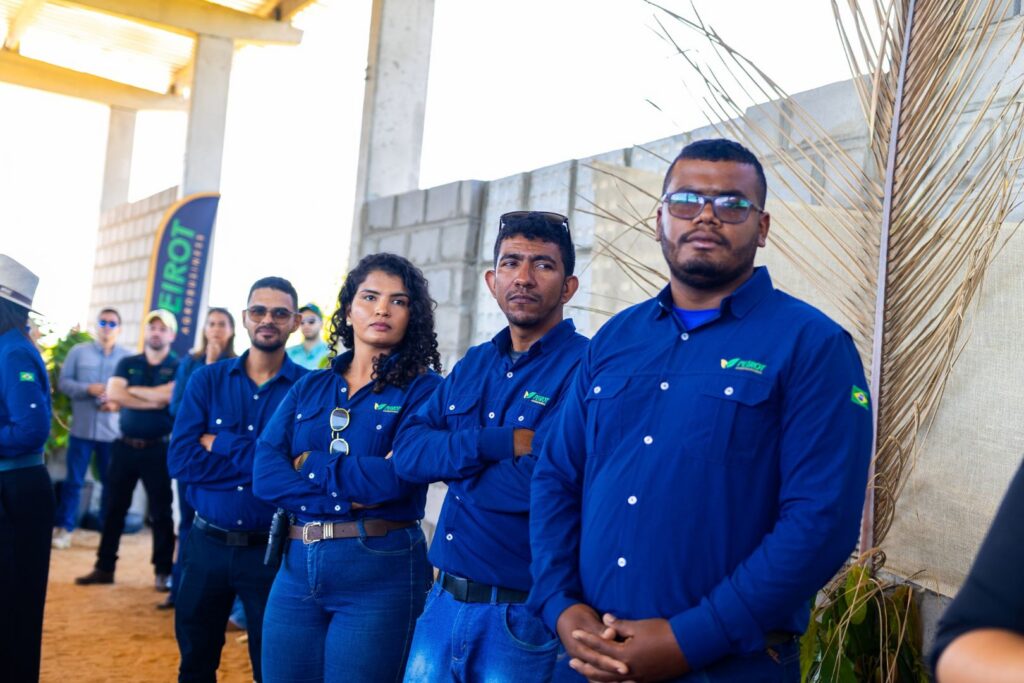
That’s an important part of the Peirot story. Our approach to cacao combines technology and agricultural science with people who understand the land, know the systems, and make informed decisions every day.
Capability is built through infrastructure and technology, but it is sustained by a team capable of putting those tools to work.
More Than a Farm Visit
The Barra AgroShow Farm Visit was an opportunity to share what Peirot has been building in Fazenda São Roque, but it was also an opportunity to exchange ideas with the broader agricultural community.
We believe there is enormous potential in bringing new technology, agriscience, data, and disciplined production methods to cacao farming. Our experience in semi-arid Bahia demonstrates that cacao can thrive in environments very different from those traditionally associated with the crop when the right systems are put in place.
Opening the farm gives others an opportunity to see those systems in action. It also gives us an opportunity to listen, learn, and continue improving.
Thank you to everyone who visited, participated, partnered with us, and helped make the Dia de Campo at Fazenda São Roque possible.
There is much more to come. 🌱